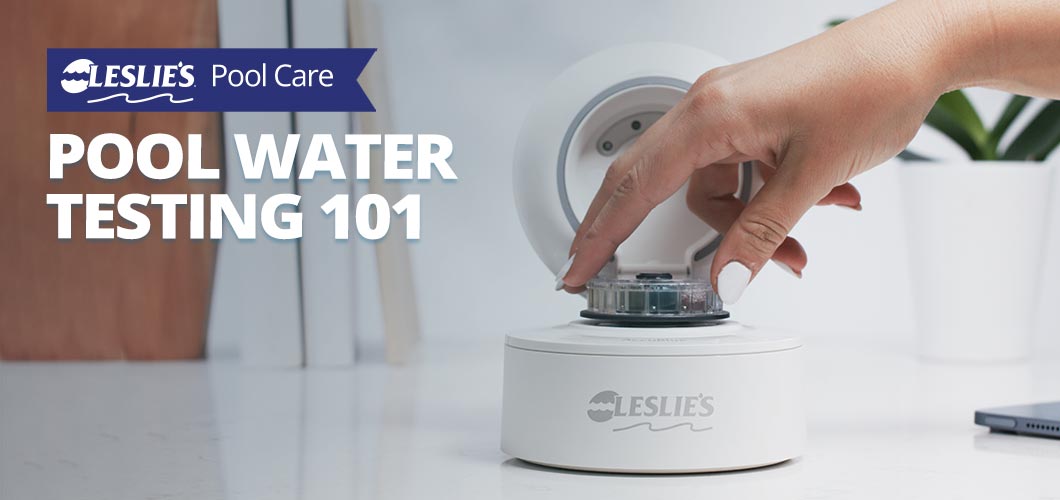
Pool Water Testing 101
Safe, healthy water. When it comes to our pools and spas, it's what we all want most. Regular water testing is an essential part of maintaining your pool’s welfare. Getting an accurate reading of your water chemistry helps you understand exactly how much of what product your pool needs. Testing your pool water prevents the possibility of under-treating or over-treating the water, which keeps your pool properly balanced and saves you money!
Let’s go over a few of the basics when it comes to properly testing your pool’s water. There are two ways to test your pool water — at home or in store.
At-Home Pool Water Testing
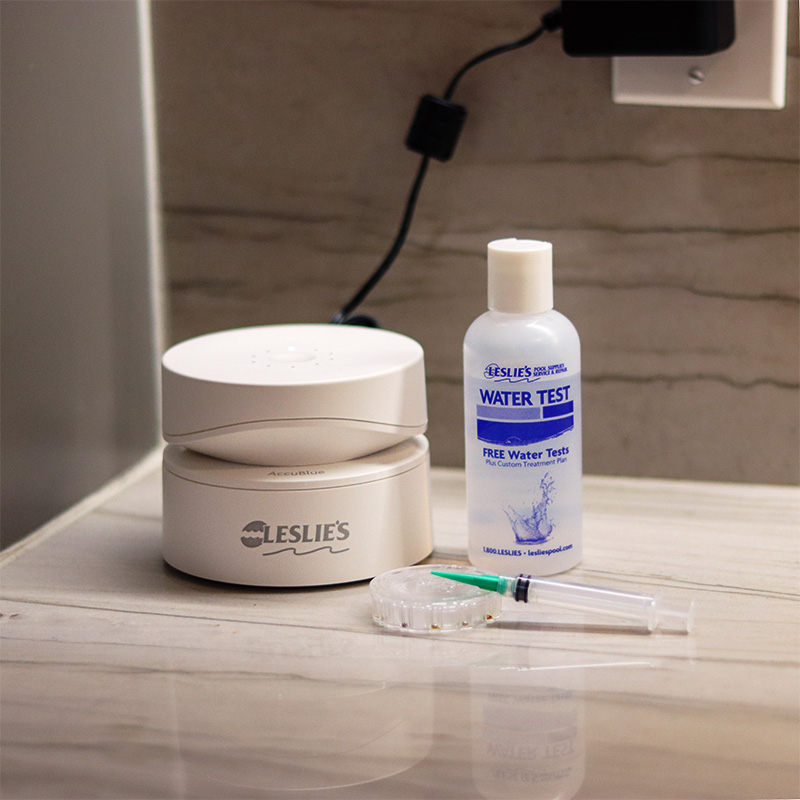
Leslie’s offers several pool water testing options you can use at home, including test kits and test strips. Or, if you're looking for the easiest and most accurate water testing experience, AccuBlue Home® brings the precision of industry-leading in-store water testing technology to the comfort of your own home. Testing at home is convenient, but there are a few things you need to know before getting started. Which type of test will work best for you? Let's take a quick look at the pros and cons of each:
AccuBlue Home®
PROS
- Most accurate type of water test available
- Results in 60 seconds
- Analyzes 10 different aspects of water chemistry
- Uses the same technology found at your local Leslie's
- Monthly membership essentially pays for itself, and includes a free testing device
- Results and customized water treatment plan delivered right to your smartphone
CONS
- You'll never want to use any other type of water test ever again!
Liquid test kits
PROS
- More accurate than test strips for testing chemistry levels in your pool
- This method is used by many pool professionals and health departments
CONS
- Can be costly for more comprehensive tests
- The most common reagent kits only test for two or three chemistry factors
- Testing process can take longer and be more complicated than other methods
- Reagent bottles must be held vertically to ensure uniform drop size, and drops must be counted as they're slowly added
- More prone to user error
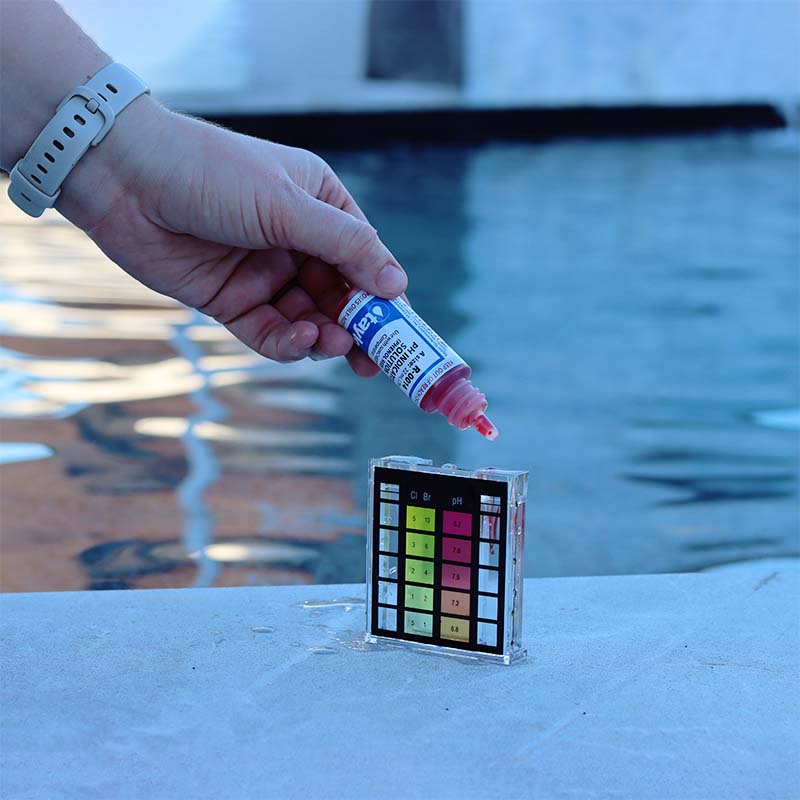
DIY TIP: Remember to never touch the reagent dropper tips, and always wash your hands after using water test reagents. Make sure to never interchange reagent caps.
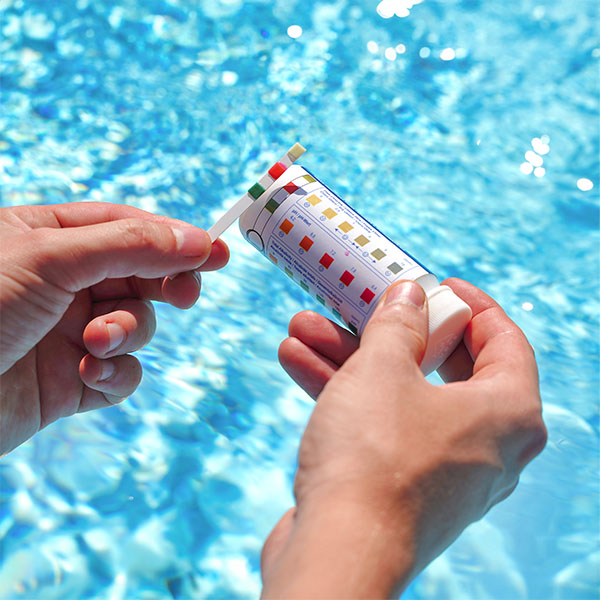
Test strips
PROS
- Fast and easy water test
- Simple to use and read
- Least expensive to purchase
- Most popular option for pool owners wanting a quick pool chemistry analysis to check chlorine and pH levels on a daily basis
CONS
- Fewer options for testing capabilities
- Not as accurate or precise other at-home tests
- Some results take just a few seconds to develop, and some take longer, so it's important to understand timing for accuracy
- Hands must be completely dry when removing the strip from the container
At-Home Pool Water Testing Tips
It's a good idea to always keep essential pool chemicals on hand, so you can treat your pool as needed. These include a primary sanitizer to kill germs and algae, a weekly shock treatment to keep your sanitizer working effectively, and water balancers to manage pH, Total Alkalinity, and Calcium Hardness. Use the results of your water test and the size of your pool to determine proper dosage according to the product label. Here are 10 helpful tips to get the most accurate testing results:
- Always follow the instructions that come with your water test kit or test strips.
- Most pool tests check Free and Total Chlorine, pH, Total Alkalinity, Calcium Hardness, and Cyanuric Acid. If you have a salt pool, test your salt level too.
- For liquid test kits, collect your water sample 12 to 18 inches below the surface after the pump has been running for at least 1 hour. Take the sample away from return jets and floating chlorinators. For test strips, follow the label directions.
- Ideal water chemistry ranges:
- Free Available Chlorine: 1.0–4.0 ppm
- pH: 7.4–7.6
- Total Alkalinity: 80–120 ppm
- Calcium Hardness: 200–400 ppm
- Cyanuric Acid: 30–50 ppm
- Metals: 0 ppm
- Phosphates: 0 ppb
- Total Dissolved Solids: 0-2,500 ppm
- Salt: Follow manufacturer recommendations
- High chlorine can affect other test results, especially pH and Total Alkalinity. If chlorine is too high, wait for it to drop before testing again. In severe cases, use a chlorine neutralizer. Some kits recommend not testing pH or alkalinity if chlorine is 5.0 ppm or higher.
- Some test results take a little time to develop, so read the instructions before testing.
- Store all test materials in a cool, dark area, and check them for accuracy on a yearly basis. Expired testing materials can cause inaccurate readings.
- Always test your water before adding chemicals.
- After adding chemicals, let the water circulate fully before testing again. This usually takes 4 to 8 hours, depending on your pool size, pump, and run time. Follow product label directions.
- Even if you test at home regularly, bring a water sample to your local Leslie’s at least once a month for a full water test and treatment advice
DIY TIP: Even if you can't bring a water sample to your local Leslie's, it's easy to get a customized water treatment plan. Simply download the Leslie's app to your phone and enter the results from your at-home water test. The app quickly highlights any chemistry issues in your pool and provides recommendations for getting your water back in balance.
In-Store Pool Water Testing
If you're not the DIY type, or simply want to get the most accurate, professional water test reading, we recommend bringing your water to your local Leslie's. We offer free in-store AccuBlue® water testing at all store locations. Simply bring a sample of your pool water to any Leslie’s location for your free test, and our helpful, friendly associates will prescribe a customized treatment plan based on your test results. The treatment plan is a step-by-step, easy-to-follow approach to maintain clean, safe, and beautiful pool water.
Whether you test your water at home or bring it in for professional testing, it's vital that you maintain a regular testing and balancing schedule, and test the water at least once a week during swim season. By knowing the condition of your pool's water, you can keep it safe, healthy, and sanitized at all times.
JUMP IN WITH US ON SOCIAL!